


Good morning and welcome back to Creative Parenting Club.
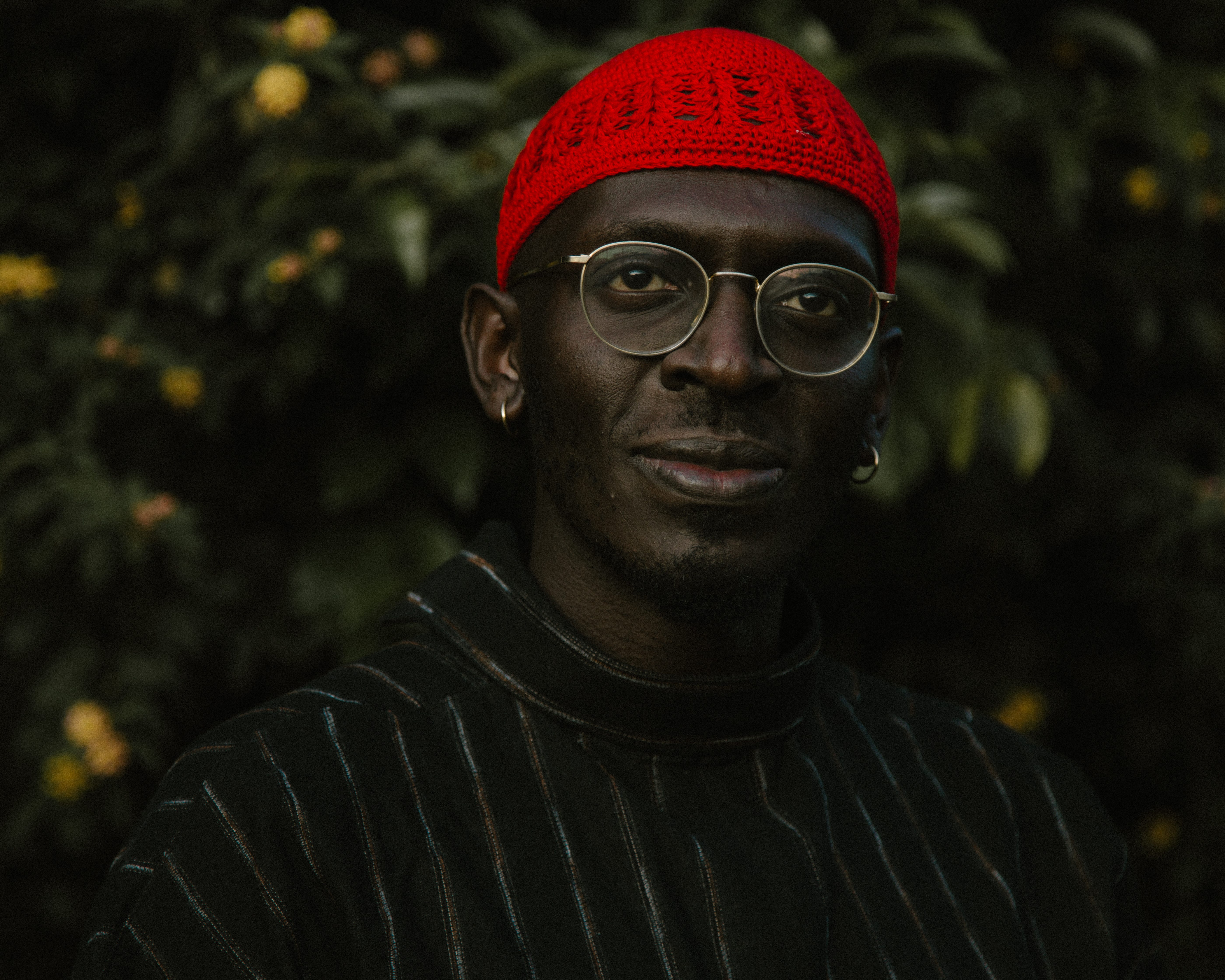
This week on CPC, we present a new episode of the Creative Parenting Podcast with Emo Rugene, a DJ, community builder, and father from Kenya who has been living in Berlin for more than a decade.
Emo is involved in several creative communities across the city, from music to running culture. Alongside his work as a community manager in the footwear industry, he is part of projects such as In Living Colour and Run & Rave, initiatives that bring people together around music, movement, and shared cultural spaces.
In the conversation, Emo speaks about the path that brought him from Kenya to Europe, from starting a shoe brand and studying in Austria to building a life in Berlin while raising two children. His story includes questions of resilience, identity, and the unexpected directions that careers and family life can take.
We also discuss parenting from the perspective of a father raising children between cultures. Emo explains how he approaches creativity at home, why asking questions can sometimes be more useful than giving answers, and how he tries to pass on confidence and cultural roots to his children.
Press play above to listen to the full conversation, or continue reading below for the shortened transcript.
If you haven’t yet read our previous interview with Stasya Mindlina, part of the Kinder Rave and CPC crew, on single parenting, adjusting step by step, and making space for fun, you can find it here:

Thank you for reading and for being part of the Creative Parenting Club community.
[Creative Parenting Club - Diego Ain]
And we’re live here at the Creative Parenting Club. Today we have my dear Emo Rugene. Welcome to the show, brother. It’s great to have you here.
[Emo]
Thank you for inviting me. It’s a big pleasure.
[CPC]
Let’s start with the basics. Where are you from and where do you live now?
[Emo]
I’m from Kenya and I live in Berlin. I’ve been in Germany for about eleven years now. At some point the story becomes about identity and where you belong, because when you live somewhere long enough it becomes part of who you are.
[CPC]
Did you come directly to Germany from Kenya?
[Emo]
Not exactly. I first went to Austria for my master’s degree. I studied politics, and the program was partly in Austria and partly in Kenya. Germany is where I eventually came to live permanently.
[CPC]
What brought you from Kenya to Austria in the first place?
[Emo]
At that time, I was studying politics, but I also had a side project. I had my own shoe company. I was producing shoes and selling them.
I’ve always been someone who tries to build something on the side while still having a backup plan. That’s why I continued studying while running the shoe business.
After graduating, I was actually thinking about continuing the shoe business and maybe even going to the US to try modeling. You know how it is when you’re young and you believe everything is possible.
But on my graduation day I received an email saying I had been accepted to a master’s program in Austria with a full scholarship. My sister had studied in the same program before.
So I decided to take the scholarship while continuing to work on the shoe business.
[CPC]
And what happened with the shoes?
[Emo]
I continued working on them and later I moved to Germany. I ran a Kickstarter campaign to fund the production of the shoes.
The idea was that people could pre-order the shoes for around sixty or seventy euros, and when the shoes came to the market they would cost around one hundred and twenty.
The campaign worked well and we raised around thirty-five thousand euros.
We decided to produce the shoes in Ethiopia because they have a strong shoe manufacturing industry. Many brands produce there, so it seemed like a good decision.
But when the shoes arrived in Berlin, the sizing was completely wrong. If someone was size 47, they needed size 44. If someone was size 38, maybe 37 would fit. Basically the entire production was defective.
People started sending the shoes back. By that time the money was already gone because it had been used for production. That was the end of the shoe business.
[CPC]
That must have been difficult.
[Emo]
Yes, but it also gave me experience.
Later I applied for a job at Zalando. I had five interviews in different departments before someone finally gave me a chance.
At Zalando I worked as a buyer for shoes. All the experience I had gained from running my own shoe business suddenly became useful.
Sometimes you learn things through experience, but they’re not written anywhere on paper. Until someone gives you the opportunity, people don’t always recognize that experience.
[CPC]
That’s a great example of how something that looks like failure can actually lead somewhere else.
[Emo]
Exactly. People often talk about failure like it’s the end of the story. But if you look at athletes like Michael Jordan or Kobe Bryant, they lost many times before winning championships. Failure is usually learning.
When I was applying to Zalando, I kept telling a friend of mine, “My job is at Zalando.” Even after several interviews that didn’t work out, I kept applying.
Eventually the right person saw my experience and gave me a chance.
[CPC]
How many kids do you have and how old are they?
[Emo]
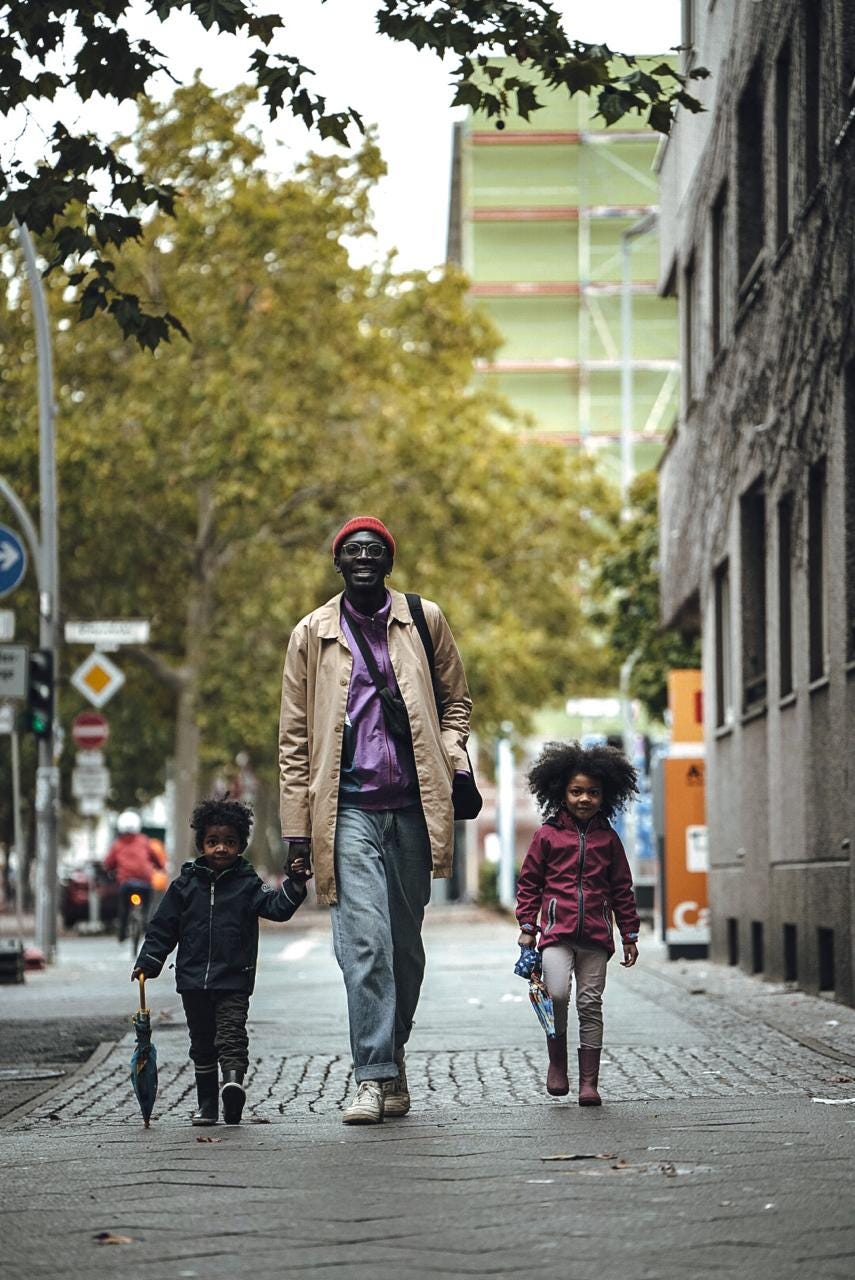
I have two kids. My daughter Nia is 11 years old. She’s exactly as old as my time in Germany because I moved in October and she was born in November. And then I have my son, Nuri, who’s nine.
[CPC]
What do you do professionally now?
[Emo]
Professionally I work for On. It’s a Swiss company that produces shoes and apparel. I work there as the community manager for Germany.
On the side I also run a collective called In Living Colour. It’s a collective of Black DJs where we try to create more representation in different music spaces.
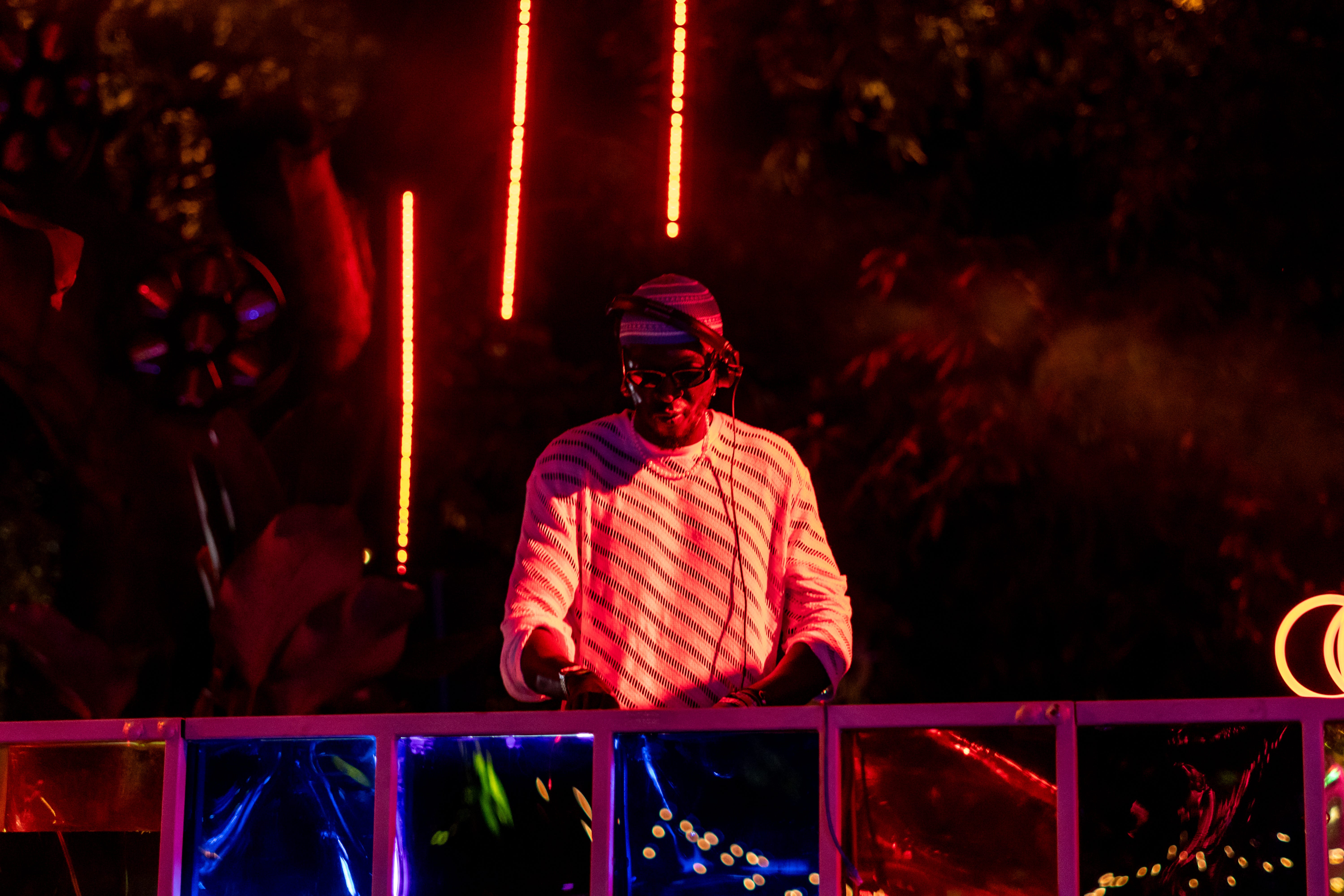
And under that we also run a running community called Run & Rave with my friend Ben.
So in many ways the work I do is about building communities.
[CPC]
That’s interesting because the thread of community seems to run through everything you do.
[Emo]
Yes, exactly. Whether it’s running, music, or events, it’s always about bringing people together and creating spaces where people feel represented and connected.
[CPC]
What do you think your talent is?
[Emo]
Resilience.
People often talk about talent like it’s something you’re born with. But resilience and hard work are things you can build.
If someone asked me to choose between Messi and Ronaldo as a role model, I would choose Ronaldo. Not because Messi isn’t great, but because Messi’s natural talent feels impossible to replicate.
Hard work is something you can learn and practice.
So when someone asks me about my talent, I say my talent is resilience.
[CPC]
I love that answer.
Let’s talk about creativity. What does creativity mean to you?
[Emo]
Creativity is connecting things in an unconventional way. It’s about combining ideas that normally wouldn’t go together and making them work.
Many people assume there is only one correct way to solve a problem. Creativity is about finding alternative ways of solving problems.
[CPC]
And what role does creativity play in your life?
[Emo]
In almost everything I do.
Many of the jobs I’ve had are things people usually study for, but I didn’t. I found other ways to get into those spaces.
Where I come from, people sometimes talk about “African solutions for African problems.” It’s about being resourceful and finding ways to solve things even when resources are limited.
For example, once something fell inside the hollow leg of a table at work. My colleague didn’t know how to get it out. For me the solution was obvious: turn the table upside down. But for him that idea never occurred.
That kind of thinking - looking at something differently - is creativity.
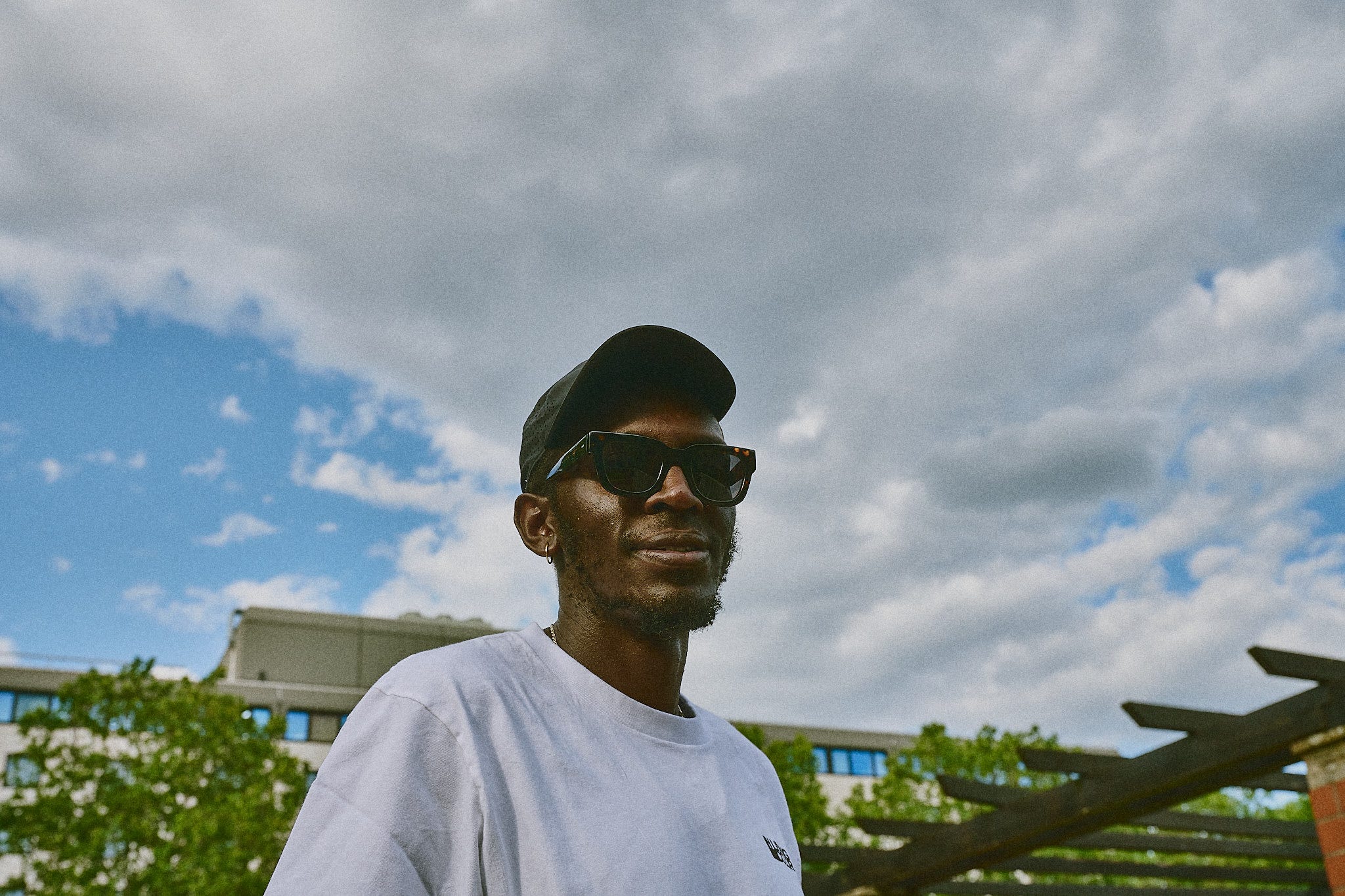
Emo playing at Beneath the Baobab Festival, Kenya
[CPC]
How do you incorporate creativity into your family life?
[Emo]
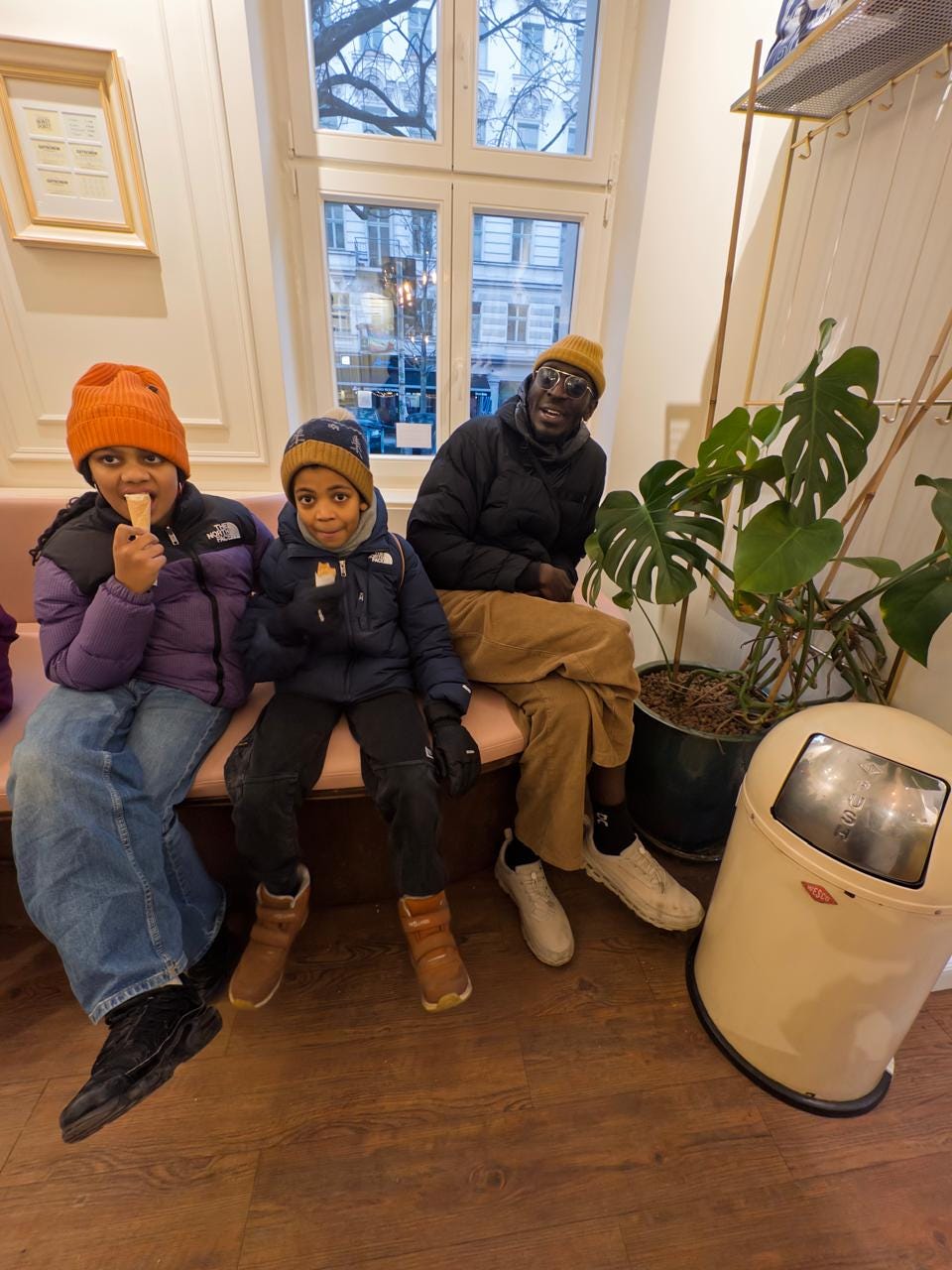
I’m divorced, so when I have my kids, I have them fully. We alternate days with their mother. When they’re with me, it’s just us.
I try not to be a very traditional parent. Instead of always giving answers, I ask questions. If something happens, I ask them what they think about it, why they think it happened, or what they think the solution could be.
Sometimes I even give them the wrong answer so they can challenge it. It takes longer, but it helps them develop their own thinking.
When they were younger, I also did something that some people found strange.
If they fell, I didn’t immediately pick them up. I would go next to them and ask what happened. When they stood up on their own, that’s when I hugged them. That way they learned independence.
[CPC]
How do you find time for your creative passions while balancing family life?
[Emo]
Luckily, when I don’t have the kids, I have time for myself. But it can still be difficult. Sometimes I wait until they go to bed so I can work on my DJ sets or listen to music. But sometimes I sit down on the couch and fall asleep immediately.
Balancing everything, kids, work, music, can be challenging.
Sometimes there are also logistical challenges. For example during festival season I might have gigs on different days of the week, and we have to coordinate with their mother about who has the kids when.
Sometimes I also bring them with me to certain events. They can see what I do, and it becomes part of their world as well. But it’s important that they also have the choice. If they don’t want to come, I respect that.
[CPC]
Has becoming a parent changed your relationship with money?
[Emo]
Definitely. When you have kids, you become more conscious about the work you take. If I take a gig that pays very little, I’m losing time with my children. And you only have a limited number of years with them while they’re young. So you start thinking more carefully about how you spend your time and energy.
[CPC]
What is one regret you have about becoming a parent?
[Emo]
I love my kids deeply. But if I’m honest, I think I had them too early. I became a father at 27 while also moving to a new country and starting a new life. It was a lot at once.
Looking back, I think the bigger regret is that my relationship with their mother wasn’t stable enough before we had children.
When a relationship is strong, the child becomes part of that foundation. But if the relationship is unstable, everything becomes more difficult.
[CPC]
What is the biggest challenge you face as a creative parent?
[Emo]
Balancing gigs and time with the kids. Sometimes I might have gigs on Friday, Saturday, and Sunday. Then I start asking myself if I’m really spending enough time with them.
[CPC]
If you had a magic solution for that challenge, what would it be?
[Emo]
Becoming a bigger DJ so I could play one gig instead of three. One gig that pays enough so I don’t need the others.
Another solution would be having a partner. Not necessarily someone to become the mother of my kids, but simply another adult in the household who helps create balance.
[CPC]
What is something your parents used to tell you that you now find yourself saying to your kids?
[Emo]
Recently, I caught myself scolding my daughter about school. I was telling her she needed to bring her assignments home and stop being lazy. Afterwards, I thought to myself: why was I so hard on her? And then I realized it sounded exactly like my mother.
[CPC]
What is something you know you need to improve in yourself as a parent?
[Emo]
Communication. My kids are getting older and they’re very smart. Instead of always presenting solutions, I need to communicate more openly about how I feel.
Sometimes I come in with authority and say, “This is how it has to be.” But better communication means allowing space for dialogue.
[CPC]
If you could guarantee that your kids learn one thing in life, what would it be?
[Emo]
Self-belief. Believing in themselves and trusting that their ideas and goals are valid. There’s a lot of doubt that systems can put into people. I want them to keep their confidence and believe in themselves.
[CPC]
To finish on a high note: what is something you are proud of in your family life?
[Emo]
I speak to my kids in Kiswahili. They usually answer in German or English, but I still speak Kiswahili to them. For me it’s important that they stay connected to their roots and understand where their father comes from.
Maybe right now they don’t appreciate it fully. But when they get older, I think they will understand how valuable that connection is.
[CPC]
That’s beautiful. Thank you very much for sharing your story and your time with us.
[Emo]
Thank you for having me. Conversations like this are important.
I’m part of a group called Black Dads Germany. People share different issues there. Sometimes it’s problems with the Kita, sometimes divorce, sometimes just questions like where to get help.
Because often people forget about fathers. There’s a lot of focus on parenting, but people forget the father’s side. As a man there’s often a lot of expectations. You’re supposed to provide, take care of things, do this and do that. But sometimes the question is, who is actually taking care of you?
[CPC]
Yes, true. A very interesting topic for the show.
[Emo]
I'm going to check it out and see if we can get more guests for the show.
[CPC]
Thank you brother! It was an amazing conversation. A big pleasure to have you here.
A sincere thank you to Emo Rugene for taking the time to speak with us.
And what helps your children develop confidence and belief in themselves?
We’d be glad to hear your thoughts in the comments.
If you would like to take part in a future Creative Parenting conversation or suggest someone whose story belongs here, feel free to reach out.
More podcasts ahead. Thank you for reading and for being part of the Creative Parenting Club community.


